


I am not a big fan of New Years Resolutions. I feel like they carry a negative connotation and are more tied to feelings of guilt, rather than to Godly intentions of purpose and growth. In my opinion, they are also usually about an unrealistic quick fix, and therefore don't set us up for long-term success. I know everyone has their own opinions, and if New Years Resolutions work for you, by all means, take advantage of them! I have just noticed certain patterns with myself and others in years past which have led to how I view them.
While I do not personally set resolutions, I do feel that the new year is a good opportunity to start intentionally practicing new habits, especially those that build us up mentally and spiritually. I view this habit change process as being less about a quick fix, and more about taking advantage of an opportunity to reflect and find small sustainable ways to improve. This is something that takes time and patience as God does the work on us from the inside out. This approach is more likely to result in a Godly transformation. Resolutions rely on our resolve, rather than in God's redeeming power. It is not a bad thing to possess resolve, but the problem comes in when we place more trust in our efforts, rather than in God's ability to work in us.
Philippians 2:13 says: "For it is [not your strength, but it is] God who is effectively at work in you, both to will and work [that is, strengthening, energizing, and creating in you the longing and the ability to fulfill your purpose] for His good pleasure."
There is value in taking the time to self assess on a routine basis. For me, the new year is merely a timing trigger to do so. To start, I consider the last year and try to examine my habits. I look for patterns to see what is working and what isn't. What is moving me toward my goals and desired character traits, and what is holding me back. Then, I create a game plan as to how I can cultivate better habits and weed away those that don't serve me well. Whenever I am trying practice new behaviors, it helps me to replace old with new so that I don't slip back into prior routines and habits. On the other hand, if we try to remove one habit without replacing it with another (or if we try to add a new habit into an already over-full schedule), it can be very difficult to maintain those positive changes. Matthew 9:16-17 gives us some insight to how things can go wrong when we don't properly align change with God's design for the process:
"And no one puts a piece of cloth that has not been shrunk on an old garment, for such a patch tears away from the garment and a worse rent (tear) is made. Neither is new wine put in old wineskins; for if it is, the skins burst and are torn in pieces, and the wine is spilled and the skins are ruined. But new wine is put into fresh wineskins, and so both are preserved."
Here are 5 habits I have put into practice over the last several years. I share these habits specifically because they are all habits which have added value to my life. After successfully implementing and practicing them consistently, they have in return produced growth and spiritual progress in my life.
1. Spend the first part of your day communicating with God.
If this isn't something you already do as part of your daily routine, I encourage you to do so. Start with just a chapter of the Bible a day and 5 minutes in prayer. You can always do more, but the idea is to keep it simple enough that it allows you to develop the habit without getting overwhelmed. Before you read the chapter for the day, ask the Lord to give you one verse that He wants you to think more deeply about. It might be a verse that will apply to something going on in your life, or it might be an insight into developing a character attribute you want to acquire. It might simply be something that sheds light on the heart of God and gives you a fresh perspective of Who He is, or even how He sees you.
2. Keep a gratitude journal.
Each day after I spend time in the Word and in prayer, I think about 3 things that I am grateful for and write them down in a small notebook. Nothing fancy, just a Dollar Store spiral notebook! The key is that they should be 3 new things each day. This process actually helps your brain to develop a more positive perspective on everything! No, really! It has been scientifically proven in multiple studies. It works something like this... the first few days it is easy to come up with things you are grateful for. After a while though, you'll run out of obvious things, and have to look deeper. Eventually, you'll end up pulling positives out of situations that you perceive to be negative on the surface. As you do this over time, your brain will actually reset itself to scanning for the positives throughout your day—even when you aren't even thinking about it!! It won't happen overnight. Give it a month or two, but you'll be shocked when your knee-jerk reaction after someone comes to you with a complaint or a problem is to blurt out something good about it. I know it amazed me when I first started the habit.
- This is something that just about all of us likely struggle with. It can be hard to develop discipline around getting good sleep. Not just enough sleep, but quality sleep. What exactly do I mean by this? Here are a few things help with quality sleep:
- Make sure there is minimal light and noise disruption in your room when you are trying to sleep. For some people, it might be helpful to use white noise or earplugs to minimize noise disruption. Consider using black out curtains if there are lights outside your window that can't be blocked out. You can also wear a sleep mask (as long as the sensation doesn't effect your sleep).
- Avoid screen time 1 hour before bed (TV, computer, and the phone) as the light disrupts your circadian rhythm. Use blue light blocking apps or glasses if you need to be on your device even a few hours before sleep.
- Just as you practice any other routine, you should practice a "sleep routine" too. The idea is to do something that serves as a trigger which helps your body to "prepare" for sleep and lets your mind know it is time to wind down and relax. Maybe a warm epsom salt bath, reading a few pages in a book, or even gentle stretching.
- Try to go to bed at around the same time and wake up at the same time. There is a feature on most smart phone which you can set to remind you to start your night-time routine. It can be helpful to alert you that it is time to rest for the day, but after that, try to stay off your phone.
- A lot of people use their phone as an alarm clock, but if possible, get an old fashioned one and keep the phone out of your bedroom. It helps eliminate the temptation to check it during the night, or while you are trying to fall asleep.
- If you can, set a goal to go to bed 30 minutes earlier than what you normally have been and see how much of an impact it has on your day once the cumulative rest starts to take effect!
- Try not to hit snooze in the morning. This is actually WORSE for your rest than the fragmented sleep you think you are getting. Trust me, the science proves it here too. This interrupted sleep isn't really rest at all, and can actually make you more drowsy for up to 4 hours after!
4. Be present and in the moment.
Easier said then done! This one hits home...I am the worst about trying to multitask. Here again, science has shown that divided attention not only makes us less efficient, but also causes us to be less satisfied with our experience! Here are some small, simple ways to start practicing mindfulness and being more present:
- Don't pull your phone out at meals or when in conversation. It really makes a difference. True connection is so rare these days. It tells people they are valuable and important.
- Don't eat while working on something else. Pay attention to your food, chew thoroughly, and have the full experience of your meal. You'll experience better digestion, be more satisfied with your meals, and may even find yourself less snacky later on.
- Be ok with being bored. We are conditioned to the constant need to be doing something at all times. Think about it... any time there is a free chunk of time, what do we end up doing? Usually, we end up texting or scrolling social media. Whether we are standing in line at the store, or sitting in the waiting room at the MD office, even when we are stopped at the light in traffic, we pull out the phone. Instead, lets try to get comfortable with spending more time in meaningful thought. Your mind thinks more creatively when it has room to do so. Also remember that sometimes we must be still in order to hear God clearly (See 1 Kings 19:12)—another good reason to allow yourself some distraction-free time.
- Upgrade TV time. Instead of zoning out, play a game with your spouse or family, go for a walk, or read together.
5. Read (at least) 10 pages a day.
I highly recommend books that are related to personal growth / development, a subject you want to learn more about, or devotionals. (Note: there is nothing wrong with fiction! It can be a great way to relax, which is also beneficial). Why 10 pages? This isn't a hard and fast rule, but 10 pages a day is enough that it will have an impact on you, but not so much that it is overwhelming to your time. You can also listen to audio books if it is difficult for you to find time to read. I listen to books during my work commute and while I work out. This process has been one of the biggest assets to expanding my knowledge base, learning how to see things in a new way, developing a growth mindset, and growing deeper in my connection with the Lord. Consider reading a book with a friend or your spouse so you can discuss it with them. When you take time to discuss your thoughts on what you have read, you'll be more likely to retain and apply what you've learned.
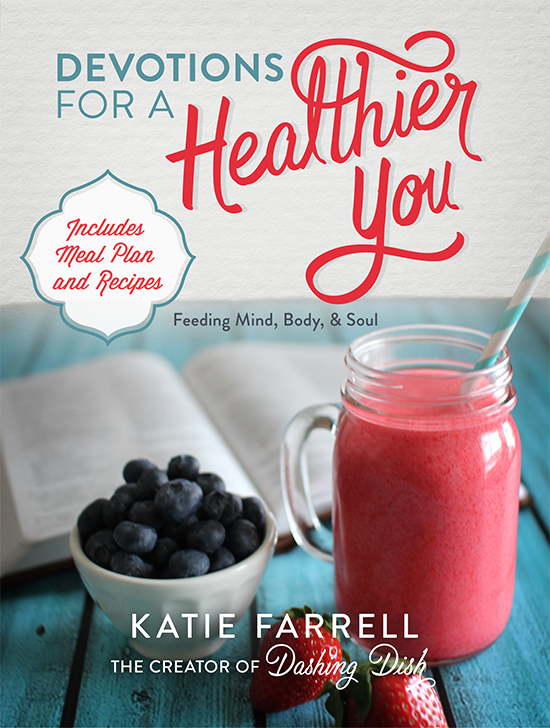
Whether or not it involves the habits above, I pray that the Lord speaks to you about ways to develop healthy habits this year. A wonderful resource to get you started with this process is Katie's new book Nourish. In it, she speaks to how our choices impact the fruit we ultimately bear in our lives. She also explains the steps we can take to learn how to cultivate habits and behaviors God's way, as well as how we can begin to have a greater understanding of this process from His perspective. What we sow, we ultimately reap, so let us plant and nurture with clear intention!
Do any of these habits sound like something that you need to implement in your own life? Are there any other new habits you are implementing this year? Please share below, or start a discussion in the Dashing Dish Facebook group!


on this blog post
More Comments Loading...I'd love to hear your thoughts!