


With the world at our fingertips (smart phones), we don't have to look very far to feel bombarded by all of the food "rules" and opinions about what to eat. If you are like me, you probably feel fed up with all of the contrary opinions and extremes that are being marketed as fact. The truth is, I have seen far to many women (including myself), hurt by diets, food “rules” and a culture that idolizes body and food. I believe we enjoy food in its place and care for our bodies without making it overly complicated. The way I see it is this, God never intended us to over think food, rather to fuel and move our bodies so they work properly, so we can fulfill our purpose and focus on Him and others. So how do we ditch the diets, calorie counting, obsession with the scale, and learn to listen to our bodies!? I believe it can be so simple; and it all begins with mindful eating!
Personally, mindful eating simply means to be more aware of what and why you are eating. Instead of eating out of a response to an emotion, social pressure, or just to eat, I now enjoy food with the primary focus to nourish my body. One of the ways that I have become more mindful in my eating has been by asking myself two important questions. First, I ask myself, how will I feel about this choice later on, and second I ask, is this beneficial to my body? I have learned that when we take a moment and think past our current situation, we are more likely to make a choice that leads to peace.
Before I eat something outside of a nutritious meal, I like to ask myself: How will I feel as a result of eating this? Will it leave me feeling bloated and the need to take a nap, or will it leave me feeling energized and fueled for my day? I have learned that weighing the outcome has prevented me from making choices that I would later regret. Thinking ahead in this manner prevents me from experiencing the heavy burden that comes with sin.
The second question I ask myself in regards to mindful eating is, “Is this choice is beneficial?” This allows me to properly distinguish if something is good for me or not. This is especially helpful when something is a grey area, with no clear right or wrong answer. For example, even though I know that all things in moderation are not necessarily bad, I have to ask myself if partaking in them will create an inroad for sin or bondage in my life, or if it will take away from my health. Typically, if I am torn between two opinions, I decide if something is beneficial by asking myself, will this choice allow me bring glory to God in my body and soul? For instance, I know that whenever I eat foods that are high in sugar, it creates a hypoglycemic response in my body. So, because of my response to sugar, and for the sake of better health, I have found it best to abstain from sugar as much as possible. Because everyone’s body is so unique, we must ask ourselves how our choices are effecting our ability to do God’s work.
The combination of these two questions have benefited my health in more ways than one. They have also allowed me to distinguish and overcome many unhealthy habits. For example, in the past, I struggled with the temptation to eat late at night. I knew that I wasn’t truly hungry because it was always after I had enjoyed a healthy and balanced dinner, and sometimes even dessert. Yet despite being physically full, I would find myself in the kitchen looking for a snack. Often times it would be something like popcorn, chips, or something that I could eat mindlessly while relaxing for the night. I was finally able to break this habit when I started to ask myself ahead of time how I would feel about my choice later on, as well as if it was beneficial. Asking these questions allowed me to be honest with myself and recognize that my choice to eat late at night always led to regret (in addition to a horrible stomachache in the morning.)
After coming to this realization, I was able to set healthy boundaries for myself, and decided to set a ‘lights off’ policy for the kitchen after I had enjoyed my last meal for the night. After a few weeks of asking myself the questions, “how will I feel about this later on, and is this beneficial”, I was break free from this habit once and for all. That being said, as helpful as mindful eating has been in my life, I also want to be sure to set a proper balance in regards to this practice. While it is important to be mindful, it is also critical that our thoughts don’t become consumed with food, whether it is overcoming a disordered pattern of eating or learning to pay attention to our food choices. When most of our thoughts are spent thinking about food (even if it is related to eating healthy), it can do more harm than good.
This is why it is so important that we keep the focus of our lives centered around Jesus, and ask Him to help us care for our bodies. This is best described in Matthew 6:25-27, where Jesus tells us, “Do not worry about everyday life—whether you have enough food and drink, or enough clothes to wear. Isn’t life more than food, and your body more than clothing? Look at the birds. They don’t plant or harvest or store food in barns, for your heavenly Father feeds them. And aren’t you far more valuable to him than they are? Can all your worries add a single moment to your life?” How, then, do we shift our focus off of food, while still planning ahead and being mindful of our eating? This can be done by viewing food and eating as an act of worship! Jesus lived a life of worship as He walked with His Father daily, bringing Him glory with everything He thought, did, and said. I believe the first step to becoming more like Jesus is to pursue worship in every area of our lives, no matter how big or small.
When we have a heart of worship, we are continuously bringing all before Him, holding nothing back. It is in this place of surrender that He is able to cleanse and deliver us from our weakness and temptations. For this reason, I believe that worship is the ultimate path to purity in every area of our lives. The Word of God confirms that this is true, even in our eating. 1 Corinthians 10:31 tells us, “So whether you eat or drink, or whatever you do, do it all for the glory of God.” Whenever we focus on anything more than God, that very thing distracts us from our worship to Him, and it quickly becomes an idol.
However, when we start to view eating and drinking as an act of worship, we shift our focus off of food and onto the one true God. Suddenly, something that was once selfish in nature becomes transparent and open to the light of His truth. It is then that we find true satisfaction, and the things we looked to for comfort (such as food), suddenly become worthless in comparison. One of the ways that we can worship God with our eating is by asking for His wisdom on a daily basis. As we seek His will and treat our bodies as instruments used to serve Him, we start to die to our sinful desires. Practically speaking, we can do this by taking a moment to pause and pray before we eat. By thanking Him for the gift of food, we are inviting Him to the table with us, and we are able to focus our attention on His guidance and leading.
We can also pray and ask the Holy Spirit to give us wisdom to know when we have had enough and when our bodies are properly nourished. Through this simple act, we are putting food in its proper place and viewing our meal time as an expression of worship. Presenting our bodies as a sacrifice of worship unto the Lord brings a sense of thankfulness in our hearts. It is in this place of worship that He is able to satisfy the deepest longings of our hearts and lift any of the emotional burdens that we may be carrying. Another way we can worship the Lord with our bodies is by fasting. Fasting is repeatedly referred to throughout Scripture as a sacrificial form of worship and prayer. When we deny ourselves physical nourishment for a short period of time and turn our attention to seek God, we are reminded that He is our true source of satisfaction. We can see in Isaiah 55:1-2 that Jesus Himself invites us to find nourishment in Him:
“Is anyone thirsty?
Come and drink—
even if you have no money!
Come, take your choice of wine or milk—
it’s all free!
Why spend your money on food that does not give you strength?
Why pay for food that does you no good?
Listen to me, and you will eat what is good.
You will enjoy the finest food.”
In my own life, I have found that fasting allows me to rest in God’s nurturing care in an entirely new way as I reset my focus back on Him. (It is important to note; wisdom must be used when fasting. For this reason, I recommend seeking Godly council before beginning a fast.) If you desire to come to a place of balance and freedom as it relates to eating, take the first step by changing your focus of food. Instead of looking to food bring a temporary sense of satisfaction, turn your eyes upon Jesus, who is able to fulfill the deepest longings of your soul.
God’s Word tells us that Jesus came to set the captives free (Luke 4:18). If you believe this promise, you can believe that He will set you free from any kind of disordered eating or unhealthy habits. Seek Him for wisdom on how to care for your body, and set healthy boundaries that will help you safeguard your freedom. As you worship the Lord and make Him your refuge, you will find that His presence fills you in a way that food never could. He loves you right where you are, right this very moment, and He is inviting you to taste and see that He is good!
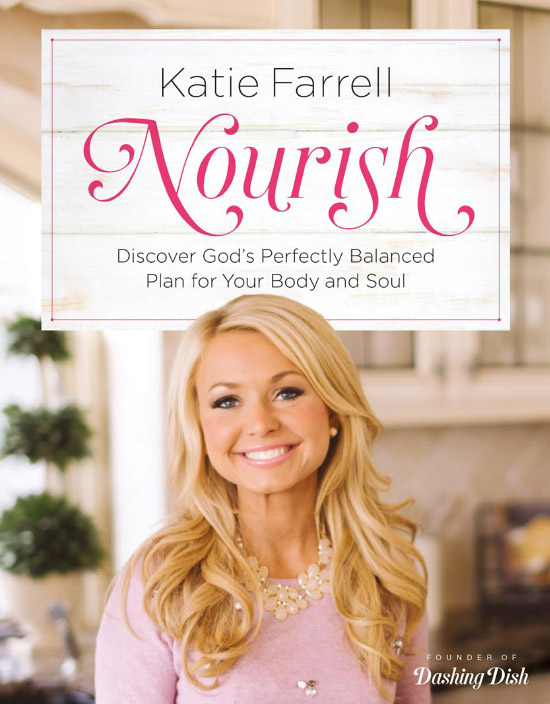
{This is an excerpt from my book Nourish. In Nourish I share encouragement and practical knowledge for living a healthy lifestyle in addition to providing a balance of spiritual and physical nourishment. To learn more, visit www.NourishBook.com}

on this blog post
More Comments Loading...I'd love to hear your thoughts!