


I start preparing my salads by planning what type of salads I will be making that week. I am someone who could eat the same thing for a few days without getting tired of it, so I generally plan to have the same ingredients on my salads for that week. (I generally make about 4 salads per week, and the rest of the week I plan to eat leftovers from some of my dinners). After I plan out what type of salads I will be having, I make a list (which can be done with the Dashing Dish grocery list builder), and head to the grocery store.
The first thing I do when I get home is start preparing the meat/proteins for my salad. This is usually chicken- either grilled, baked, or cooked in the crockpot, and some times hard boiled eggs. Other sources of protein/fats that I like to add to salads are chickpeas, nuts, feta cheese, shaved parmesan, and avocado, just to name a few!
While my meat is cooking, I wash my fruits and vegetables, and lay them out on a big kitchen towel, which makes it easy to wash them all at once. I then dry them individually, and slice them up. (You can put them in separate containers at this point, or if you don't want to dirty dishes, you can just keep them on separate piles on the clean kitchen towel.) If you are eating the salads from home, you can put each ingredient in a covered container in the fridge, and assemble the salads when you are ready to eat!
If you are making salads to pack and take with you on the go:
Once the meat is cooked (and cooled), and the veggies are washed, dried, and chopped, I am ready to assemble my salads! The key here is to put the ingredients in layers (I like medium-large size mason jars, which I bought in a 12 pack at Walmart for a really good deal), or Tupperware/sealed containers of some sort. Layering will ensure that none of your ingredients get mushed which would make them bruised, soggy, and wet.
I recommend starting with your meat, and beans if you are using them. Next, start layering your vegetables, starting with the most firm vegetables, such as bell peppers, onions, carrots, celery, etc. Then layer the cheese on if you are using any, and end your softest vegetables and fruit at the top. Also, if you are using nuts, hard boiled eggs, or avocado, I find that these are best on the very top because they tend to get soggy.
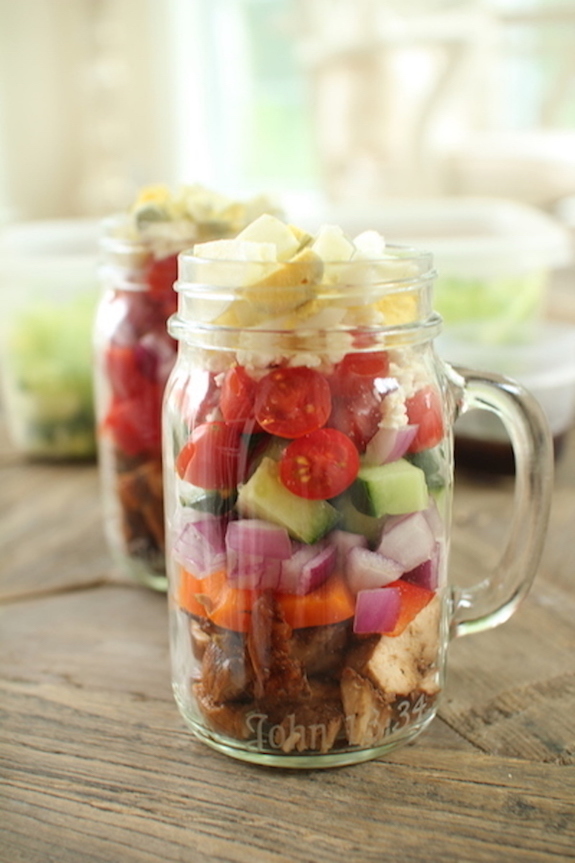
Now that you have your salad toppings prepped, it's time to prep the lettuce! I like to divide anywhere from 3-4 cups of romaine lettuce, spinach, (or shredded cabbage if I'm doing Asian inspired salads) among a few different Tupperware containers (depending on how many salads I am making that week). I like to package the lettuce in individual medium-big size containers (4-6 cup size) that will allow for some extra room at the top to pour and mix in my toppings when I am ready to eat my salad. I also like to put a paper towel in the container with the lettuce, which absorbs extra moisture, and keeps the lettuce from getting soggy.

For the dressing, I like to pack up a few small containers (1/4-1/2 cup size) of a clean homemade dressing, or garlic expressions (one of my favorite store bought dressings), and/or hummus to pour over the salad just before eating.
Now to put it all together. When you are ready to enjoy your salad, simply open your jar/container with your salad ingredients, and your large Tupperware filled with lettuce, and pour the toppings and dressing on! If you want, you can put the lid back on the large Tupperware, and give your salad a shake to mix everything together, and enjoy!


on this blog post
More Comments Loading...I'd love to hear your thoughts!